
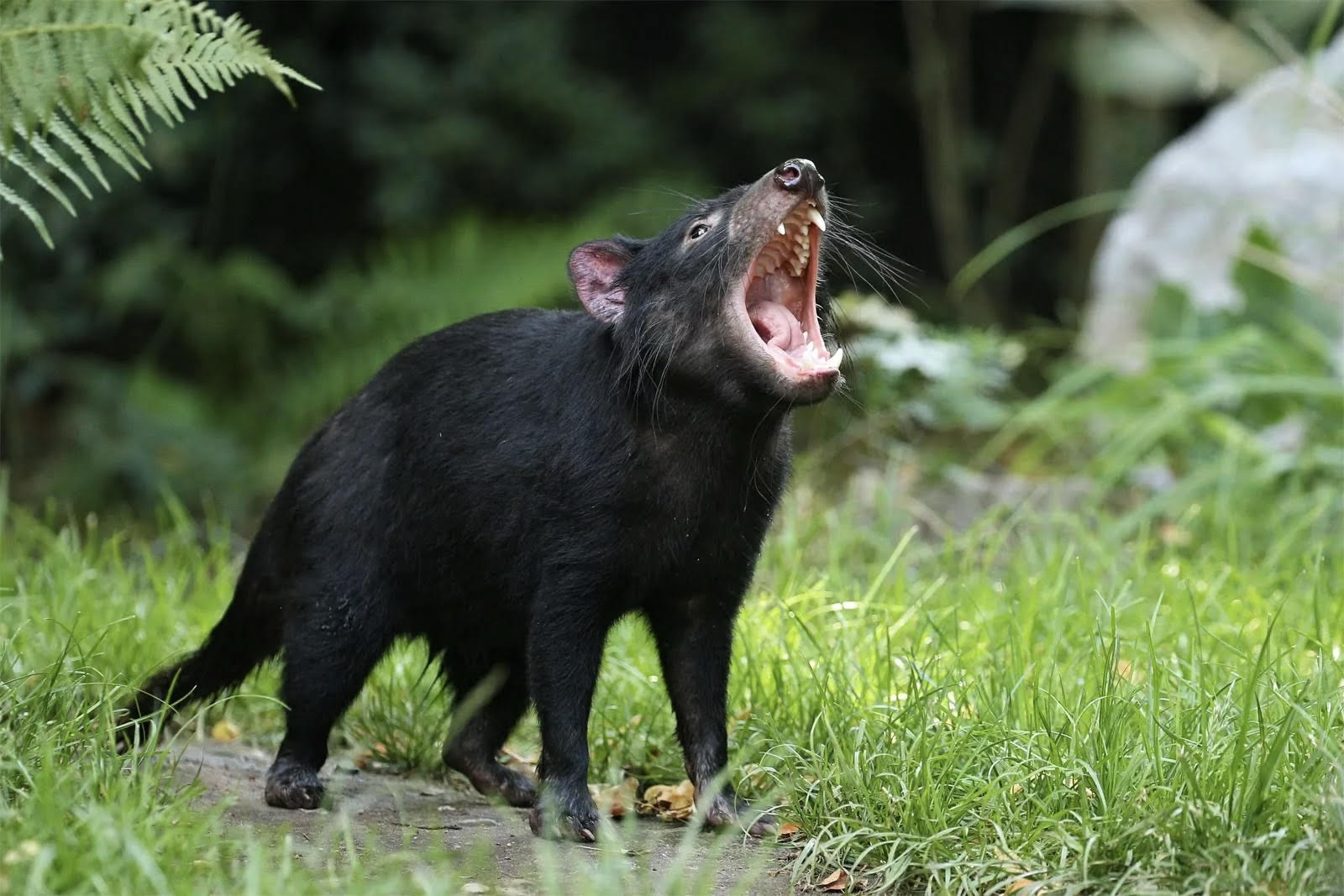
Continuing our series on Australian wildlife with the support of Dr. Phil Tucak, we turn our attention to one of the country’s most iconic and embattled animals: the Tasmanian devil (Sarcophilus harrisii). Known for its fierce reputation, this unique marsupial is facing a complex battle for survival, threatened by disease, habitat loss, and a shrinking gene pool.
Tasmanian Devil at a Glance
- Lifespan: While the oldest known devil lived to be 7, living beyond 5 years in the wild is rare.
- Adult Size: Males average 652 mm (25.7 inches) in head and body length, while females are slightly smaller at 570 mm (22 inches).
- Adult Weight: Males average 8 kg (18 lb.), and females average 6 kg (13 lb.).
- Breeding: After a 21-day gestation, females give birth to 20 to 30 live young. The young are called “pups”, “joeys,” or “imps.”
Endemic to the island state of Tasmania, the Tasmanian devil is the world’s largest surviving carnivorous marsupial. Despite its formidable nature, the species is classified as “Endangered” on the IUCN Red List, positioned between “vulnerable” and “critically endangered.” The current wild population is predicted to stabilize between 7,000 and 10,000 individuals over the next 10 years. This precarious situation is the result of several major threats, including habitat loss from human activity, road mortality (vehicular trauma), a lack of genetic diversity from inbreeding, and historical pressure from the introduction of the dingo.
Perhaps the most significant modern threat is a devastating and transmissible cancer known as Devil Facial Tumour Disease (DFTD). This fatal condition has ravaged the devil population, highlighting the critical role of disease surveillance and veterinary research in modern conservation efforts. The fight to save the Tasmanian devil is a powerful example of how wildlife health is central to preserving biodiversity.
Beyond their struggle for survival, Tasmanian devils possess remarkable traits. The young face an immediate challenge for life: while 20 to 30 are born, the mother only has four nipples in her pouch, leading to intense competition among the newborns. Adult devils are also known for their powerful bite, exerting a canine bite force of 553 N (124 lbf) with a jaw that can open to an astonishing 75-80 degrees.
To learn more: You can find more information on conservation initiatives through the Australian government’s “Save the Tasmanian Devil Program.”
Article credits: Dr. Phil Tucak, https://www.philtucak.com/
References:
https://www.iucnredlist.org/fr/species/40540/10331066
https://en.wikipedia.org/wiki/Tasmanian_devil
https://www.philtucak.com/home


